Arts & Entertainment
Rare Visitor: A Tundra Swan Visits the Coast
Birders are flocking to Pomponio State Beach to see an unusual visitor — a juvenile tundra swan.
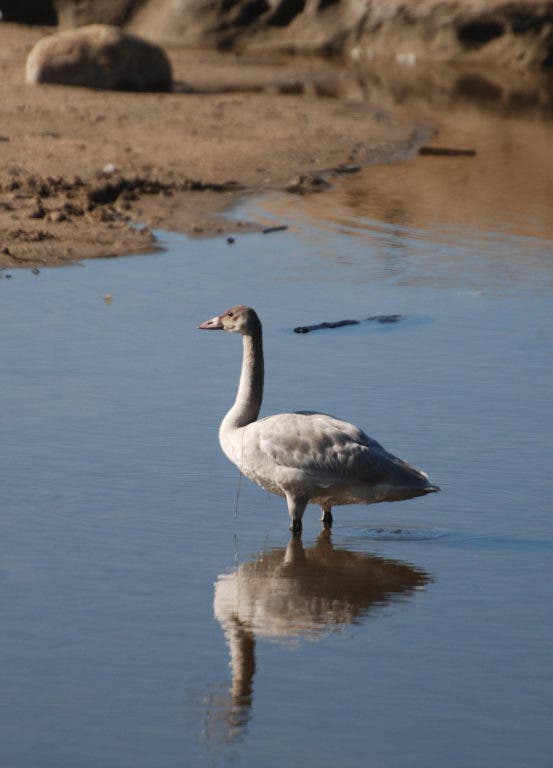


Why all the excitment? Tundra swans are rarely seen along the San Mateo Coast.
The large, graceful birds spend summers in their breeding grounds on arctic wetlands then fly south in the fall. Many spend the winter months in large flocks in the California Central Valley, gathering in marshes and flooded rice fields.
To see one alone on the coast is very unusual.
Find out what's happening in Half Moon Baywith free, real-time updates from Patch.
The tundra swan was first spotted by a local birder on Saturday, Nov. 5, in the lagoon formed at the mouth of Pomponio Creek by the sandbar at Pomponio State Beach. It was still there yesterday, foraging for aquatic plants in the lagoon and along its shores.
Judging by the swan’s gray-white plumage and pinkish-gray bill, it is a juvenile bird, hatched only this summer. After their first winter, adult tundra swans have all white feathers and black bills. The adults first begin breeding in their fourth or fifth year; they mate for life. Tundra swans may live for more than 20 years.
Find out what's happening in Half Moon Baywith free, real-time updates from Patch.
The Sequoia Audubon Society’s online birding guide has more information about the other birds you may see at Pomponio Beach, including some — a snowy egret, Bonaparte’s gulls, and various species of ducks and grebes — that are in the lagoon now.
It's worth a short trip to take a look.
To receive news feeds about Half Moon Bay and the unincorporated Coastside between Montara and Pescadero, visit Half Moon Bay Patch on Facebook and "like" us here. Follow us on Twitter here.