Schools
Marine Reserves Aid Ecosystem Recovery After Environmental Disasters, Stanford Study Finds
Protected ocean areas known as marine reserves jumpstart the recovery of nearby commercial fishing areas after an environmental event, concludes a study of abalone by researchers from Stanford and the Monterey Bay Aquarium.
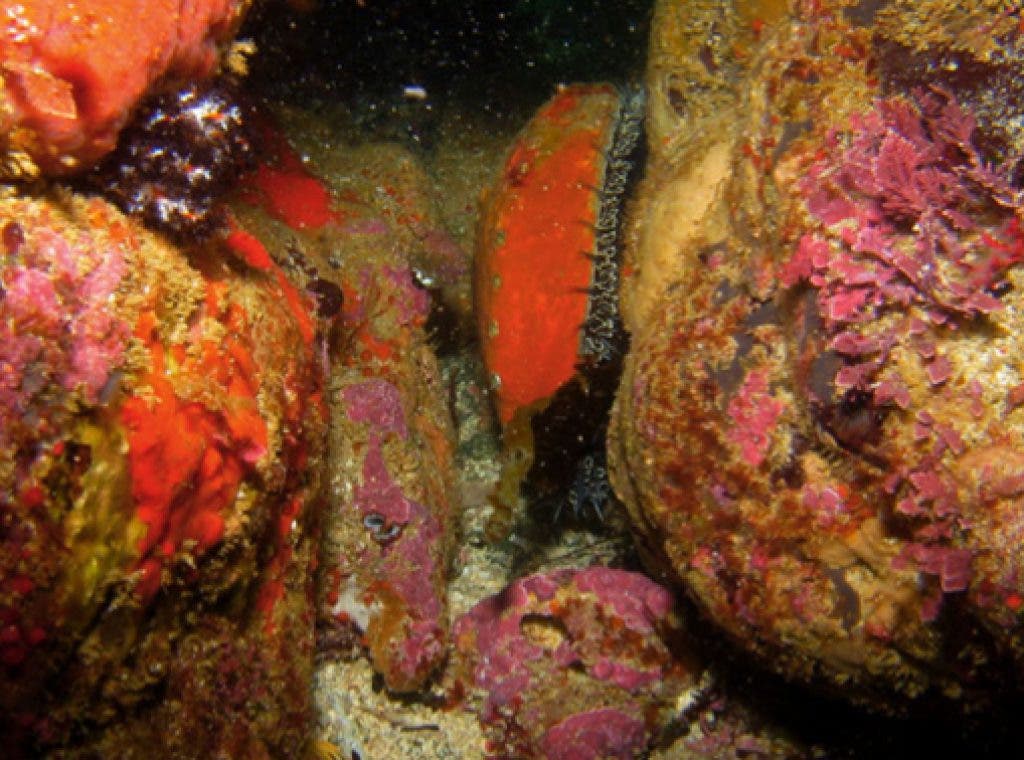
For years, scientists, fishers and government regulators could only speculate that marine reserves, pockets of ocean that are off limits to fishing, could help entire ecosystems bounce back after an environmental disaster. But scientific evidence has emerged that supports what was once just an educated guess. The new study was published July 18 in PLoS ONE.
The study revealed that after a mass mortality of marine life in the waters off Baja California, Mexico, egg production of pink abalones in the marine reserves increased 40 percent while being cut in half in fished areas. Further, the study found that a significant amount of larvae spilled over into unprotected areas open to fishing, which helped them rebound more quickly.
The study, which began in 2006, used data from abalone fishing areas around Isla Natividad, Mexico, including new marine reserves that were hard hit in both 2009 and 2010 by hypoxic events, episodes of low dissolved oxygen in seawater that weaken and kill marine life. The study, "Evidence That Marine Reserves Enhance Resilience to Climatic Impacts," was authored by a team of scientists led by Professor Fiorenza "Fio" Micheli of Stanford University's Hopkins Marine Station in Pacific Grove, Calif., in partnership with the Mexican organization Comunidad y Biodiversidad's Scientific Director Andrea Sáenz-Arroyo and other colleagues.
Find out what's happening in Half Moon Baywith free, real-time updates from Patch.
"Our study preceded the 2009 mortality event, allowing us an unprecedented view of its demographic effects, both within the reserve and in fished areas," said Micheli. The study discovered that after the 2009 hypoxic event, abalone biomass declined by 75 percent at fished sites but only 50 percent in reserves. Perhaps more important, it found that the recruitment rate (the rate at which abalone are ready to be harvested) of juveniles in the reserves remained stable but were nine times lower in fished areas. "Both the large size of the protected abalones and the population density were key to resilience," noted Micheli. "Marine reserves are vital to jumpstart the recovery of species following a mass mortality."
The Isla Natividad marine reserves were established by the local fishing cooperatives after seeing sharp declines in abalone catches due to fishing and past El Niño events. Climate change is happening on a global scale, leaving many communities with few options to protect their local ecosystems and the livelihoods that are dependent on them. The establishment of marine protected areas, including marine reserves, is one option available to local communities even while global climate change mitigation continues to be debated.
Find out what's happening in Half Moon Baywith free, real-time updates from Patch.
"Historically governments and communities had to make a leap of faith that a marine reserve could provide long-term benefits that offset the short-term loss of fishing grounds," Micheli said. "There were no studies or scientific evidence that a marine reserve could help a region of the ocean bounce back from a local environmental disaster. Now we have that evidence."
The study focused on abalone because of their high commercial value and because their populations have been depleted in recent years. Since the mid-1800s, the herbivorous mollusk has been harvested around the North Pacific, leading to a decline in the total catch of all five species from a high of 24,000 metric tons to 115 metric tons in 1995. Since 1997, both commercial and sport fishing of abalone has been closed south of San Francisco, Calif. Although commercial fishers pull $20 million of pink abalones annually from the waters off Baja California, recent years netted 10 times smaller catches than the peak year.
The hypoxic events that are impacting abalone populations are relatively new developments along the western coast of North America. Recent research indicates that midwater Oxygen Minimum Zones are expanding, setting the stage for future hypoxic events. This, combined with other environmental impacts such as an increase in mean ocean temperatures, lends scientific support to recommendations for the establishment of networks of marine protected areas to help offset environmental impacts.
The Center for Ocean Solutions is a collaboration among Stanford's Woods Institute for the Environment and Hopkins Marine Station, and the Monterey Bay Aquarium and the Monterey Bay Aquarium Research Institute. Across these institutions, the Center for Ocean Solutions draws from about 80 scholars, researchers and educators who work on coastal and ocean ecosystems in the natural, physical and social sciences. The center also works with experienced conservation practitioners and policy experts. Located at Stanford and in Monterey, Calif., the Center for Ocean Solutions is uniquely positioned to develop practical solutions to the most urgent and important ocean conservation problems.
Karen K. Marvin is responsible for communications at the Center for Ocean Solutions.
--Stanford News Service
Follow us on Twitter here | Like Half Moon Bay Patch here | Sign up for our daily newsletter | Blog for Half Moon Bay Patch here